The medical study that proves your grandmothers jokes are actually saving your life
The Silent Medicine Your Doctor Never Prescribed
Most of us treat humor like dessert — something you get to after the real meal is done, when there's time to spare and nobody's watching. But that dumb joke about your stiff knee, or the name you blanked on at the grocery store? It's doing real physiological work. Right now.
Sounds silly. I know. But a study in the European Heart Journal found something that ought to make any cardiologist sit up: patients with coronary artery disease who watched comedy sessions had significantly better outcomes than the ones stuck watching documentaries.
We're talking actual blood flow changes. A measurable drop in the stress hormones that clog arteries and spike your heart rate. Your body can't tell the difference between a bad day at work and a genuinely terrible pun. It just knows: if you laugh, it relaxes.
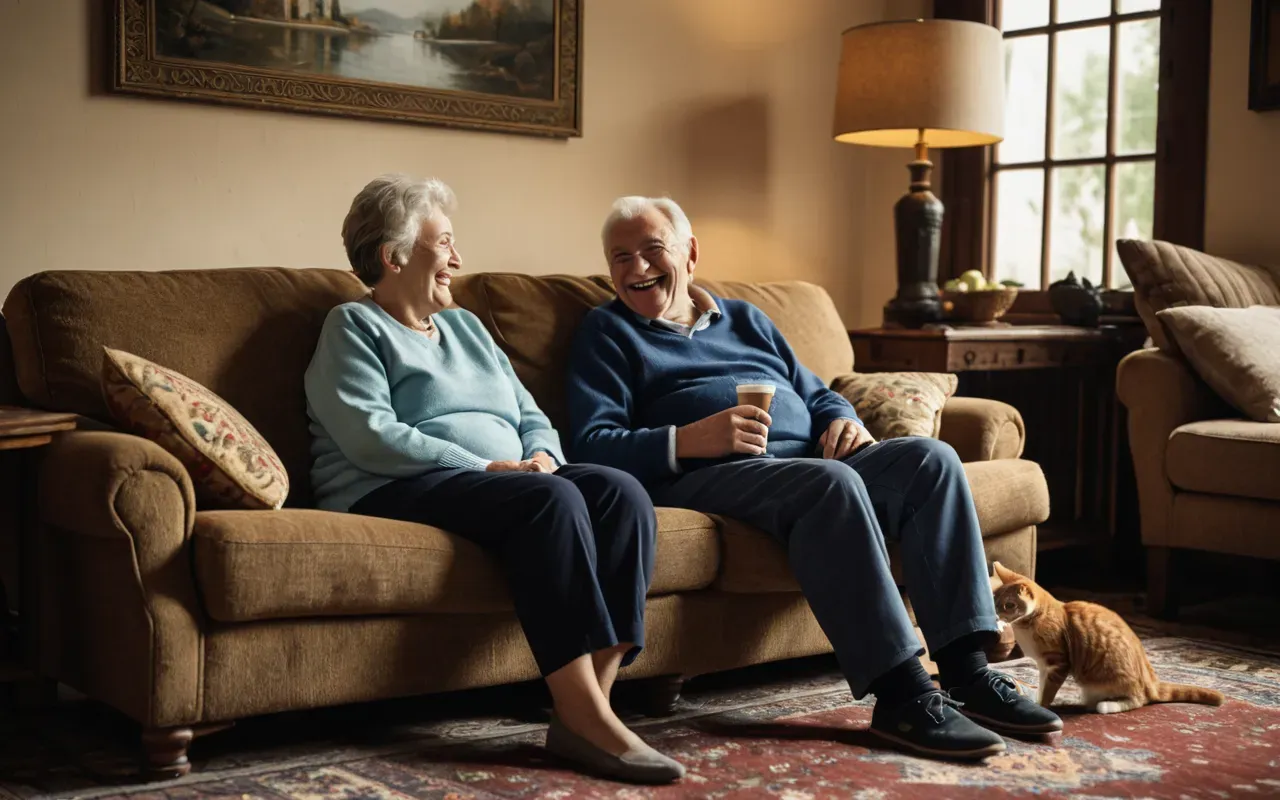
Which is where the whole idea of old people jokes stops being about ageism and starts being about survival. When we skewer our own physical limits with a little wit, we're not just being cute. We're telling our nervous system, in real time, that this threat is manageable.
Why Your Brain Craves the Absurdity of Age
Look at how a classic aging joke is built. It sets up an expectation of decline, then flips it with logic that's technically sound and socially absurd. That twist forces your brain to work — hard — to resolve the inconsistency.
And when you finally get the punchline, you get a small hit of dopamine. A reward for solving a problem that didn't actually exist. That kind of mental exercise keeps neural pathways firing in a way passive entertainment never does.
I've watched this play out. A friend of mine had a knee replacement last year, and that first week of physical therapy was brutal — sharp, constant pain. So we started swapping jokes about how her new joint is more flexible than her willpower.
Her recovery improved. Not because jokes fix bone, obviously. But her cortisol dropped enough to ease the inflammation. She slept better that night. The next day she walked two extra steps. Tiny victory. But it compounds over weeks.
There's a reason nursing homes that run structured laughter therapy report lower rates of depression. No magic involved — it's biology. Laughing makes your diaphragm pull in those deep-breathing patterns that oxygenate the blood and settle the sympathetic nervous system.
The Specific Chemistry of a Good Chuckle
Researchers at PLOS One looked at spontaneous laughter and cortisol. Even brief bouts of genuine amusement lowered those stress markers significantly. Not just a feeling. A measurable chemical shift in your bloodstream.
Share an old people joke with a friend and the social bonding amplifies the whole thing. Oxytocin rises during shared laughter — the so-called love chemical, the one that builds trust and dials down anxiety in social situations.
So when you crack a joke about your fading memory or your new p.m. bedtime, you're not just being self-deprecating. You're creating a moment of connection that physically alters your neurochemistry for the better.
The Retirement Joke as a Shield Against Fear
Retirement gets framed as a loss of identity. You stop going to work, the daily structure vanishes, and suddenly the days feel too long. That anxiety is real, and it hits millions of people every year.
Humor gives you a safe way to process it. Jokes about doing nothing without getting caught, or waking up before the sun — they're funny precisely because they name the fear of irrelevance while refusing to give it any power.
A colleague of mine retired last spring. He was terrified of the quiet. Within two weeks he'd built a whole repertoire of jokes about his new status as a professional napper. Those quips became the highlight of our days.
His anxiety didn't vanish. But it lost its edge. By laughing at the absurdity of his new life, he clawed back a sense of control that routine alone couldn't give him.
How Wit Changes the Narrative of Aging
Society loves to tell older adults to be dignified. To accept their limits quietly. That narrative is outdated — and honestly, it's harmful. It isolates people and strips them of agency.
A well-timed joke about hearing loss or back pain says: I'm still the author here. I'm choosing to laugh instead of suffer. That choice is a form of power.
And when you share those jokes with younger generations, you bridge a gap. It shows aging isn't only decline — it's perspective, and resilience.
Practical Ways to Use Humor as a Health Tool
You don't need to be a stand-up comic to get any of this. In fact, too polished might kill the effect. The best humor is usually a little awkward and deeply personal.
Start small. Spill your coffee? Instead of cursing the mess, try a quick quip about your energy overflowing in all directions. Sounds trivial, sure — but it changes how your body responds to the moment.
Keep a mental list of safe topics. Health quirks, memory lapses, physical limits — those dominate aging humor because they're universal. Everyone can relate.

Building Your Personal Joke Arsenal
Collect the jokes that actually make you laugh. Write them down, or save them on your phone. When stress creeps in, pull one out and read it aloud.
Even if you've heard it a hundred times, saying it out loud can trigger that physical release of tension. Your body responds to rhythm and timing as much as your mind does.
Then share them. Laughter is contagious in a way sadness rarely is. One chuckle turns into shared giggles, then full belly laughs, in seconds.
The Social Ripple Effect of Shared Laughter
Laugh together with someone and your heart rates and breathing patterns can actually synchronize. It's called co-regulation, and it strengthens the emotional bond between people.
In a world this stressful and this divisive, shared humor carves out pockets of safety. It reminds us that underneath our differences, we're all just humans who find the absurd funny.
Think about the last conversation where everyone was smiling. Did that day's stress feel heavier or lighter afterward? Lighter, probably. Not a coincidence — chemistry.
Why This Matters More Than We Think Right Now
We live in an era where chronic stress is the default. Phones buzzing with bad news, calendars packed with obligations. We've forgotten how to just let go.
Old people jokes are a simple antidote. No equipment, no money, no special skills required. All they ask is a willingness to see the funny side.
Feeling overwhelmed today? Try telling a joke. It doesn't have to be good. It just has to make you smile for a second. That small moment of lightness is worth more than you know.

The Future of Humor in Healthcare
More hospitals are catching on, too. Some now bring in clowns or comedians as part of their treatment teams for pediatric and geriatric patients.
I expect this trend to keep growing. More research keeps confirming what your grandmother knew: laughing is good for the body. And it costs almost nothing.
For now, we can all be our own doctors. Next time you feel the weight of life pressing down, reach for a joke. Let it lift the heavy air around your shoulders.
Embracing the Lightness of Being Human
Aging is not a defeat. It is an accumulation of stories and experiences that give us the material for our best jokes.
So keep telling those old people jokes. Keep laughing at your own quirks and the absurdity of daily life.
You are not just entertaining yourself. You are healing your body and strengthening the bonds with the people who love you.
In a world that takes itself too seriously, choosing to laugh is an act of quiet rebellion. And it just might be the healthiest choice you make all day.