The tiny fish that ruined my coworker's professional image
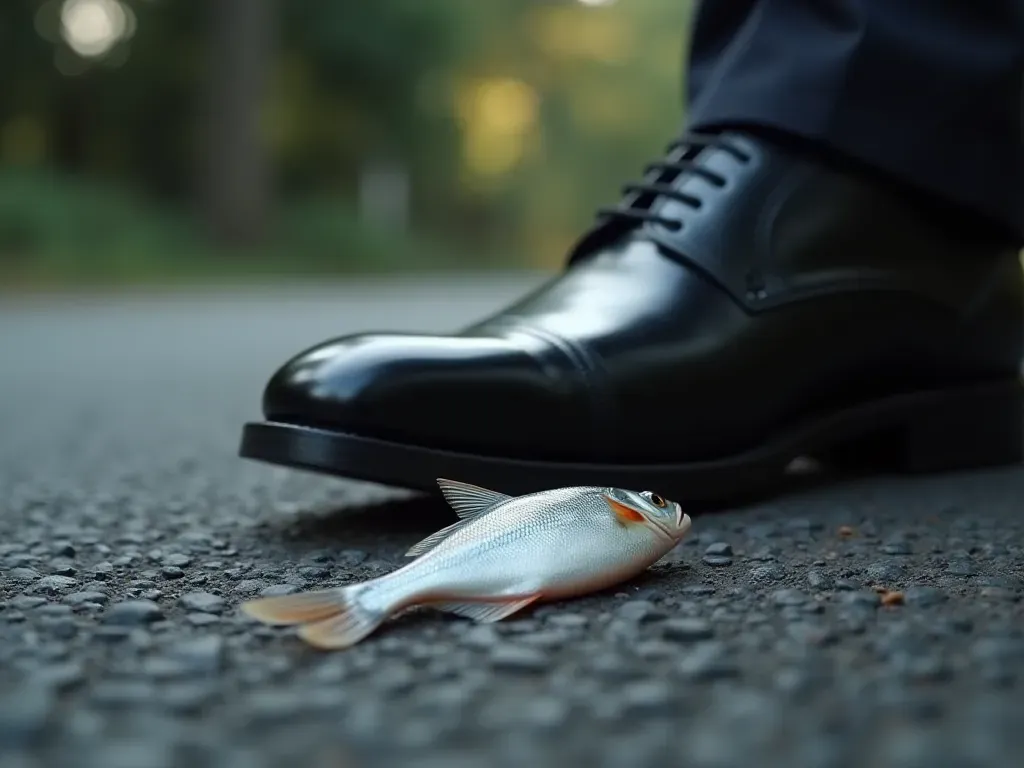
The Fish That Broke The Seriousness of the Delta Trip
I was standing in a dusty parking lot. The air smelled like hot asphalt and diesel fuel. My coworker looked at her phone with the tight jaw of someone who had forgotten how to breathe. I pointed my camera lens directly at the ground.
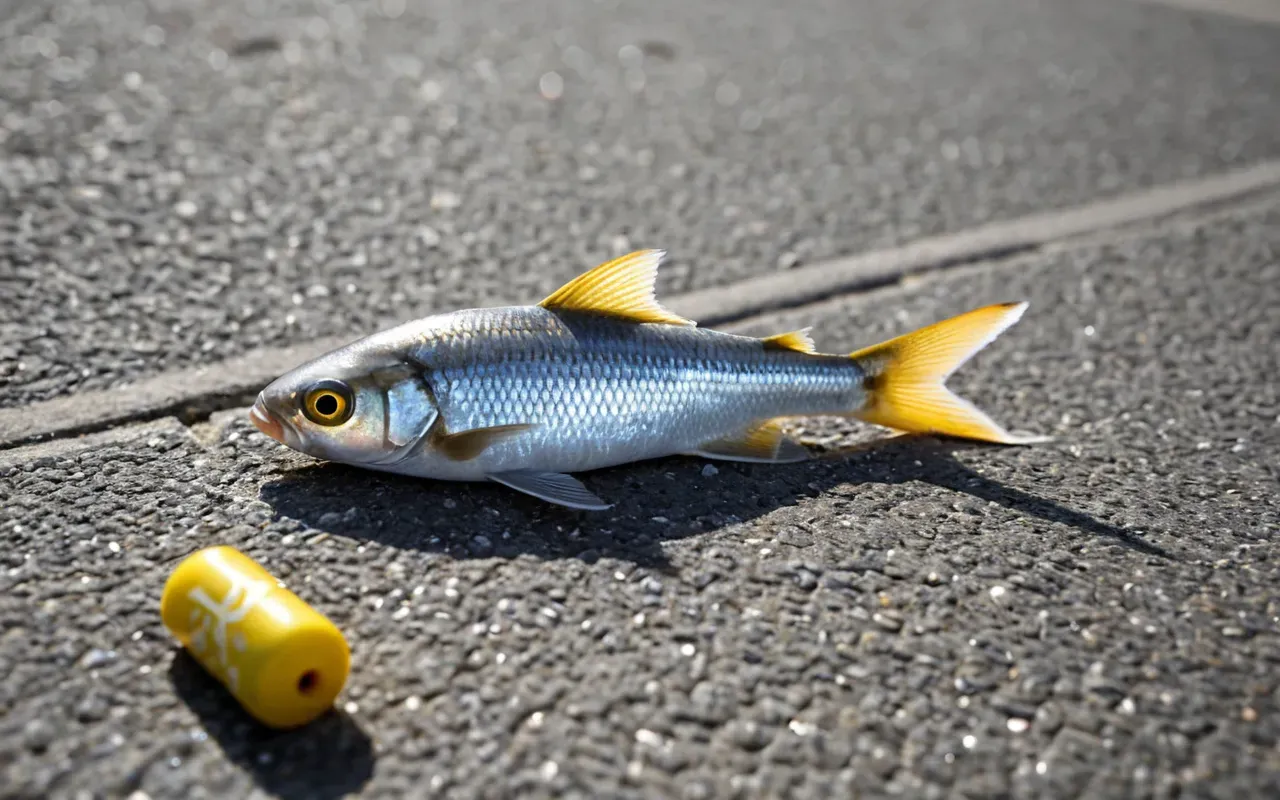
There it was. A tiny fish. Stuck in a piece of yellow chewing gum that had been dropped on the concrete weeks ago. Ridiculously specific. Completely absurd. I took the photo without thinking twice.
My coworker did not laugh. She sighed and walked back to her car with a speed that suggested she wanted to escape reality itself. I saved the image of the trapped fish as her contact profile picture on my phone.
That single act of petty digital mischief was the exact moment I understood Chris Duffy's argument. We are not missing out on big moments. We are simply failing to notice the small ones that are already screaming at us from the pavement.
Why Your Brain Is Actively Suppressing the Funny Side of Daily Life
Duffy argues that we are being beaten down by a steady stream of global news. We scroll through tragedies and economic fears until the world feels like a heavy gray blanket. He suggests this is not just bad luck but a cognitive failure.
The book proposes three pillars of good humor. The first is being present. This sounds like generic wellness advice until you realize it requires active effort to ignore your phone and look at a waiting room wall for thirty seconds.
We treat downtime as wasted time. We fill every gap with content consumption or productivity apps. Duffy argues that this desperation to avoid boredom is exactly what kills our ability to see the world's inherent comedy.
Humor springs from noticing what is off or odd. If you are staring at a screen in a glass case your brain cannot detect the strange behavior of humans around you. You miss the fish in the gum because you were watching a video about productivity.
The Science of Why We Laugh at Slip Ups
Duffy explores the benign violation theory. It states that humor occurs when a situation is a violation but it feels safe at the same time. A person slipping on a banana peel is funny because we know they will not actually break their arm.
If that same person shatters a bone the humor vanishes instantly. The safety net is broken and we switch to empathy or fear. This explains why we laugh at our own minor mistakes but freeze up when real danger appears.
There is also the encryption theory. This suggests jokes are social tests to see if your brain can solve a puzzle quickly enough. It turns laughter into an intellectual game that rewards speed and pattern recognition in real time.

The Social Risk of Sliding Down the Stairs in a Formal Dress
The third pillar is taking social risks. Duffy encourages readers to listen for the inner voice that says a behavior would be weird and then deliberately do it anyway. This sounds terrifying until you hear about the woman at the fancy party.
She decided to slide down a grand staircase on her stomach while wearing an expensive formal gown. It was physically ridiculous and socially bold. She looked like she was having the time of her life completely ignoring social norms.
We may not have the courage to mimic that specific stunt. Most of us would prefer to keep our dignity intact and avoid public embarrassment at all costs during a professional event or social gathering.
But the principle applies to smaller moments. It means asking a stranger a slightly odd question. It means leaving a generous tip without explanation or wearing mismatched socks on a serious business day when you feel confident.
Why Most People Are Afraid of Being Seen as Weird
We curate our public personas to be safe and predictable. We want to be seen as competent professionals rather than eccentric individuals who might make a joke at the wrong time or ask too many personal questions.
This safety comes at a high emotional cost. We suppress our natural curiosity and impulse to play. The result is a life that feels rigid and sterile even when we are surrounded by other human beings.
Duffy argues that the voice telling you to stop is often just anxiety disguising itself as common sense. If we listen too closely it will convince us that every moment must be productive and serious in order to have value.

The Hidden Power of Noticing Small Absurdities in Your Routine
We often wait for a vacation or a special event to feel happy. We believe that joy is something that happens to us in large doses during holidays rather than something we can build from small daily moments.
But the fish in the gum was not a vacation. It was a Tuesday afternoon in a parking lot that smelled like exhaust fumes and hot tar under my shoes as I waited for my ride to arrive.
If we can find delight in that specific image then we have unlocked a superpower. We can now see the comedy hiding inside our grocery runs and traffic jams without needing a special occasion to trigger it.
This is the real implication nobody talks about enough. You do not need to be a comedian or have a funny life. You just need to stop treating your environment as background noise for your thoughts.
How to Apply These Lessons Without Losing Your Job or Sanity
You do not need to slide down stairs in a tuxedo. You can start by leaving your phone face down for five minutes during a lunch break and watching the people around you eat their sandwiches.
Notice the way a barista struggles with a difficult order. Watch how someone tries to carry too many boxes at once and fails gracefully. These are not tragedies they are small comedic sketches in real time.
If you want to explore how these small moments build up over time check out why our hidden daily mistakes are the secret weapon for genuine humor and personal growth. The connection is stronger than most people realize.
Also consider that your bad morning might actually be setting the stage for better jokes later in the day. There is a strange alchemy to starting with frustration and ending with laughter that we rarely acknowledge publicly.

The Real Reason Most People Are Not Funny Enough in Their Daily Lives
We are trained to be efficient. We optimize our commutes and streamline our work processes until there is no room left for accidental joy or spontaneous laughter in any part of the day.
This mindset creates a world where every action must have a clear purpose. If looking at the fish in the gum does not increase your productivity it is considered a waste of valuable time.
But happiness is not a metric. It is an experience that requires you to be slightly inefficient and willing to waste time on things that do not bring a direct financial return or career advantage.
If you struggle with this balance of work and fun you might find it interesting to read about why most lifestyle coaches are wrong about your daily habits. They often miss the point that humans need messiness.
The Role of Dry Humor in Saving Your Sanity Every Day
Dry humor is the perfect tool for this. It allows you to comment on absurdity without needing to perform a bit or tell a full joke. A simple raised eyebrow can say everything.
There's something quietly defiant about it, a small act of rebellion against the suffocating seriousness of corporate life. It whispers to your brain: you're still in charge here, not just another cog in a machine engineered for maximum output.
To dig deeper into how this particular flavor of wit can actually help you handle stress, check out the hidden reason dry humor actually saves your sanity every single day. Honestly, it's a skill worth nurturing — the kind that pays dividends when you least expect it.
The Verdict on Humor Me and Whether It Will Actually Change Your Mood
Now, let's be clear about Chris Duffy's book. It's not a cure for depression. There are no magic pills, no ten-step programs promising happiness by next Tuesday, no matter what your circumstances happen to be.
What it offers instead is a reminder: the world is already funny, if you have the eyes to see it. That fish in the gum was always there, waiting for someone to stop doomscrolling long enough to actually glance at the ground.
We pour so much energy into chasing new experiences that we forget to savor the absurdity of the ones already stacked around us. The parking lot is a stage, and every single one of us is an actor strutting across it.
So the next time the news crushes you or your routine starts to feel like a weighted blanket, try to spot one small thing that's just slightly off. Maybe it's a shoe on the wrong foot. That counts.
Or perhaps it's a pigeon strutting by with an unearned sense of confidence. Stop. Notice it for five seconds. Let yourself smile before you dive back into your phone screen.
That tiny pause is where the real humor actually lives. It's not in the grand gestures or the viral clips — it's in the quiet in-between moments, the ones nobody else sees and no algorithm captures.

Every single one of us has the capacity to notice this. We just have to grant ourselves permission to stop taking the business of living so seriously, even if only for a few minutes at a time.
The world is weird and wonderful when you look at it sideways. And that fish in the gum proved it to me — on a hot, sticky afternoon when I needed that reminder more than I knew.