Why your brain refuses to finish its thoughts until you draw them

The specific feeling of a half-formed thought that will not leave you alone is distinct and deeply annoying. It hums in the back of your skull while you try to read or sleep. Most people push it down, hoping it disappears by morning. It never does.
I have spent years trying to articulate this exact sensation in words. It feels like holding a ball of wet yarn that keeps tangling the more you pull at it. The problem is not just that I am sad or anxious. The issue is that my brain has started a task and refuses to close the tab.
Then I saw Half Thought Comics. The series takes those exact tangled feelings and turns them into simple line drawings. Suddenly the weight lifts. It is not magic. It is cognitive offloading in its most honest form.
We treat our brains like filing cabinets that never get organized. We expect them to categorize every fleeting emotion instantly. But human memory is not a database.
Neuroscience tells us that unprocessed emotions occupy working memory. They loop because the brain cannot archive them without a label or an image to anchor them. Words often fail here.
A sketch is different. It captures the shape of a feeling without requiring perfect grammar or precision. This is why artists often process grief faster than writers do in some contexts.
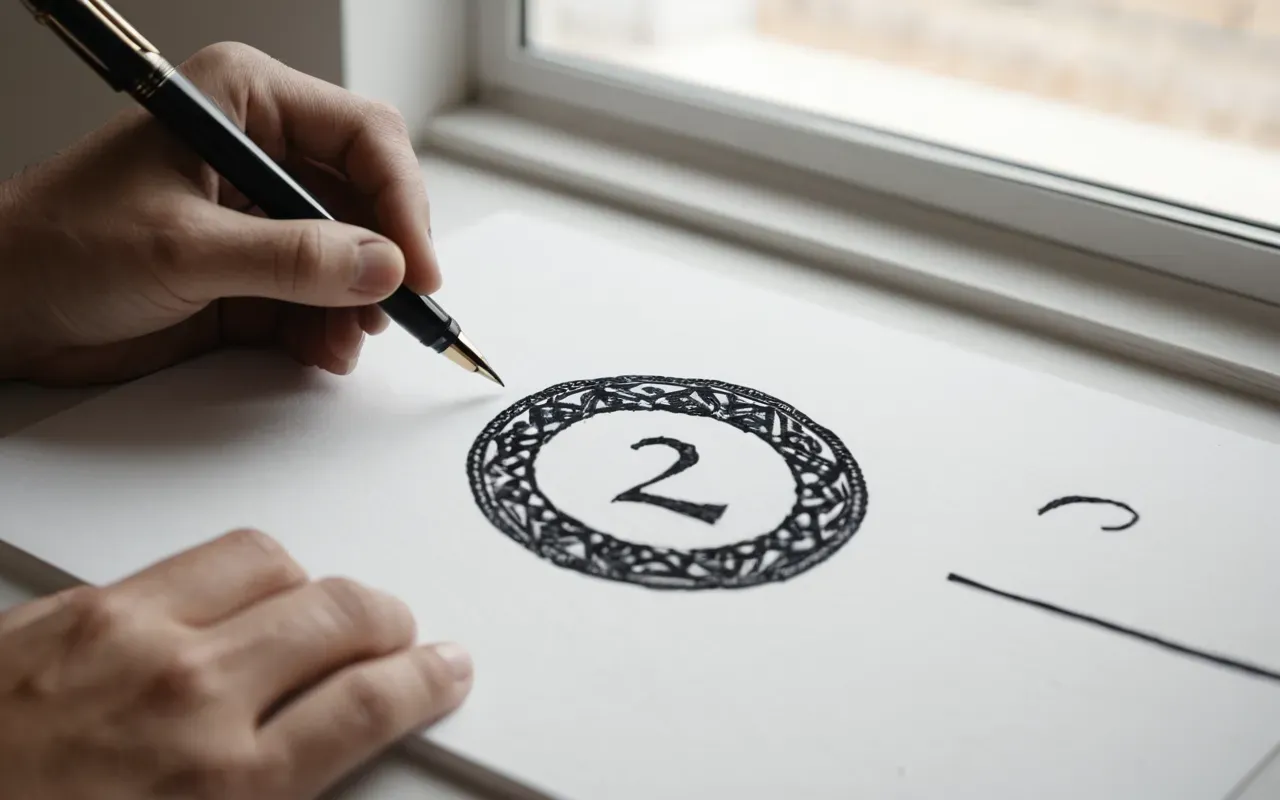
The Fun Circle Effect is a perfect example of this mechanism at work. The artist describes saying they are fine but feeling the opposite later.
This cycle repeats endlessly. You tell yourself you are over it. Then a small trigger brings the feeling back with full force. The thought was never resolved.
By drawing the cycle as a comic strip, the artist externalizes it. It becomes something you can look at from outside rather than drowning in from inside.
Most advice tells you to journal. Write down your thoughts in long paragraphs. This works for some people.
But writing requires linear logic and precise vocabulary. Many of us struggle with that under stress. We freeze when we need to explain why a minor comment hurt so much.
Drawing bypasses the verbal center of the brain. It engages spatial and visual processing areas directly. This is a faster route to clarity for many individuals.
The creator of Half Thought Comics started this series during a challenging period. They could not find the words to express their state.
They realized drawing was easier than writing. It allowed them to capture raw moments without needing a perfect narrative structure.
This is the key insight. You do not need to be a skilled artist to benefit from this method.
The goal is not beauty. The goal is release.
A stick figure with a speech bubble saying nothing conveys more than three paragraphs of polished prose. The simplicity is the point.

There is a social component to this that people often overlook. Sharing these half thoughts reduces isolation.
When you see someone else draw your exact internal struggle, it validates your experience. You are not broken for feeling this way.
The artist hopes these comics help others feel seen. That is a powerful motivation for creating simple visual content.
Humor acts as a bridge in this process. It lowers the stakes.
If you laugh at your own messy emotions, they lose their grip on you. This is a practical psychological tool.
I tried this method last Tuesday. I had a frustrating conversation with a coworker that left me irritable.
Instead of ruminating on the drive home, I sketched a tiny box with two angry faces inside. It took thirty seconds.
By the time I reached my apartment, the anger had softened into mild amusement. The visual anchor helped me close the loop in my mind.
This approach aligns with broader trends in digital wellness. We are overloading our brains with text-based information.
Visual breaks provide a necessary reset. They engage different neural pathways and reduce fatigue.
You do not need a studio or expensive supplies. A notebook and pen are enough.
The barrier to entry is zero. This makes it accessible for anyone dealing with daily stress.
Consider how many times you have tried to explain a feeling and failed. The frustration is real.
Visual language cuts through that confusion. It speaks directly to the emotional core without needing translation.

The Half Thought Comics series proves that raw life and humor can coexist perfectly. They do not need to be polished to be valuable.
In fact, the lack of polish is what makes it relatable. It mirrors our own messy internal states.
If you struggle with daily anxiety or unspoken frustrations, try drawing them. It might be the simplest tool you have.
You do not need to share them. Just draw the half thought and let it go.
This method fits well with other ways we find humor in mundane situations. It is part of a larger shift toward accepting imperfection.
We see this in how people share funny daily mishaps online. The humor comes from the shared human experience of falling short.
When you laugh at your own small failures, you build resilience. It is a quiet form of strength.
The power lies in the act itself. The drawing is just a byproduct.
You are not creating masterpieces. You are clearing mental clutter and freeing up space for what matters.
So the next time a half thought starts looping in your head, do not fight it. Pick up a pen.
Sketch the feeling in three lines or less. You might be surprised how quickly it loses its power over you.
This is not just about comics. It is about giving your brain a way to finish its work.
We often overlook simple tools that can transform our daily mental state. Visual humor is one of them.
The Half Thought Comics series serves as a reminder that we are all struggling in similar ways. We just express it differently.
Some write long essays. Others post memes. Some draw quick sketches. The goal is the same.
We need outlets that are quick and low pressure. Life is too fast for lengthy introspection every time.
A small sketch can be done in the break room or on a bus. It fits into modern life seamlessly.
I encourage you to try this once. Just one small sketch of a feeling that has been bothering you.
You do not need to be good at it. You just need to let the thought out of your head and onto paper.
The result is often surprising. The weight lifts and the loop closes.
It is a small act with a large impact on your daily peace of mind.
In the end, we are all just trying to make sense of a complex world. We use whatever tools work for us.
For some, that tool is a pen and paper. For others, it might be music or exercise.
The key is to find what helps you close the loop. Do not let half thoughts fester.
They grow heavier the longer you keep them inside. Release them early and often.
This is the hidden benefit of visual humor. It does not just make you smile.
It actively reshapes how your brain processes stress and confusion. It is a quiet superpower.
So the next time you feel stuck in a loop of unspoken feelings, remember the power of the half thought.
It does not have to be perfect. It just has to be out.
Your brain will thank you for the rest. And your mind will feel lighter.
That is the real magic of turning raw life into simple lines. It works when words fail.