Your weird habits are actually making you funnier

The tiny habits nobody talks about until they become the best story of your life
A woman in her late twenties walked into a coffee shop on a Tuesday and ordered "a medium oat latte with one pump of vanilla" — except the barista heard "one pun of vanilla." She laughed. The line behind her laughed. By 2 p.m., two strangers had messaged her to say, "I've been thinking about that sentence all morning."
That's the thing about the small quirks we all carry. They feel invisible in the moment — a fidgety tap on a steering wheel, a habit of repeating your own name after someone else says it, an insistence on counting steps up and down stairs so you never land on the same number twice. None of them seem worth mentioning.
And then one of them gets quoted at a dinner party. Or lands on a group chat with forty "LOL" reactions in under three minutes. Suddenly that tiny tic you've had since high school is the single most memorable thing about your personality.

Why the smallest quirks produce the biggest laughs
There's a simple reason your odd little habits outperform every carefully constructed joke you've ever tried to land. They're specific. A quirk is tied to one body, in one place, at one moment. "I tap my left ring finger three times before answering the phone" beats "humor is funny" by a mile — because you can picture it.
Specificity is the engine of relatability. Psychologists who study social bonding have long noted that shared small details — not grand pronouncements — are what make people feel seen and connected. A quirk gives you a handle. Someone can pick it up, turn it around, and hand it back slightly different.
The three-second rule of memorable stories
I've noticed a pattern. The stories that stick — the ones people retell at parties three months later — usually have one beat you can replay in under three seconds. A look, a sound, a single line of dialogue. Your quirk is often exactly that kind of beat.
Think about the last time someone laughed at something you did. Chances are it wasn't a monologue. It was a tap on a table, an oddly timed "you too," or the way you held your phone like a microphone during a video call with no audience.
Quirks are low-stakes and that's why they work
A quirk costs nothing to share. There's no risk of being judged for a bad joke that misses the mark — because you're not performing, you're describing yourself. That low pressure is exactly what makes people comfortable enough to laugh with you instead of at you.
And here's the part that surprises a lot of people: sharing a small oddity actually lowers your own stress. Studies on self-disclosure consistently show that letting someone know one weird thing about you releases tension in both parties. The room gets lighter.
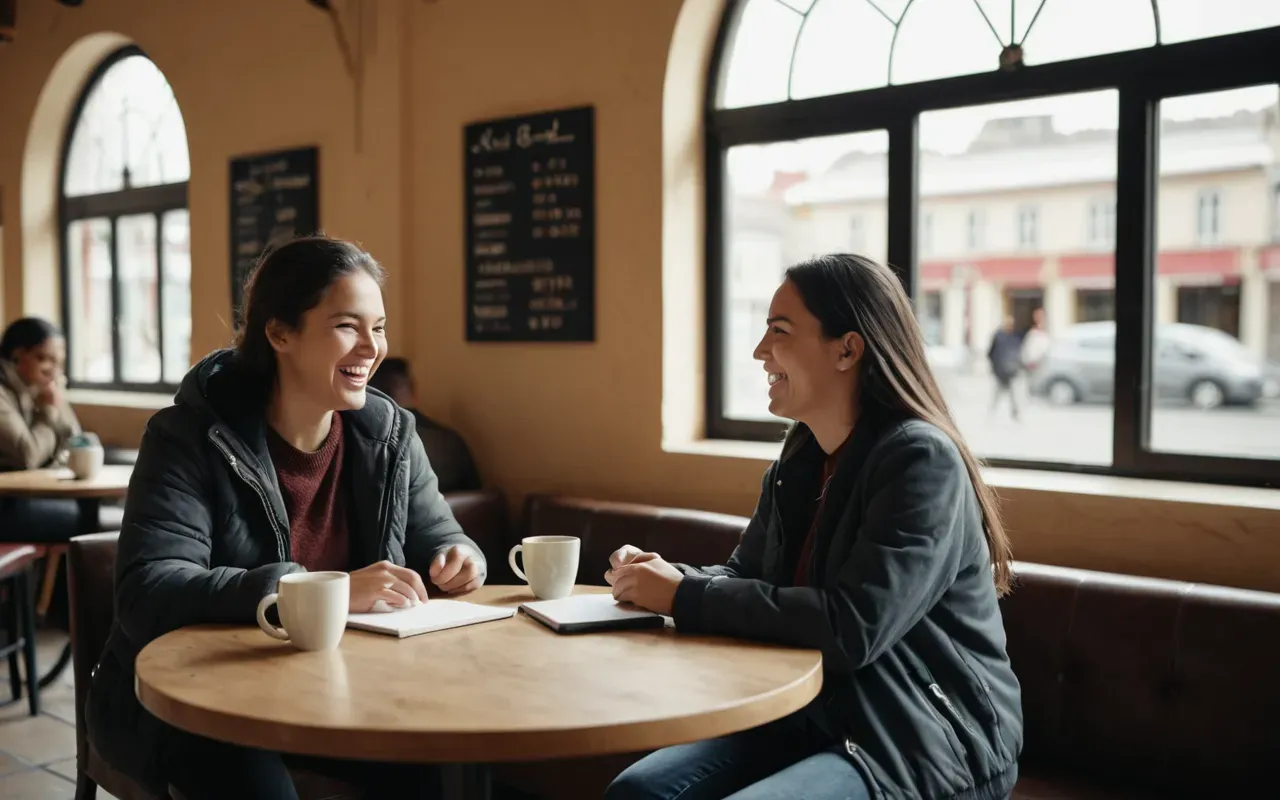
The five daily tics that turn ordinary conversations into gold
You don't have to be a comedian. You just need one or two small habits that are yours alone and slightly weird enough for someone else to notice them. Here are five I've seen turn into the best part of a conversation more times than not.
The accidental echo
You've done it. A stranger says "I'm heading to the bank" and your mouth automatically finishes with "me too" before you realize there was no question being asked. The pause that follows is almost always funnier than any joke.
The over-explained apology
You bump a cart at the grocery store and instead of "sorry," you launch into a forty-word explanation that includes your dog's name, today's weather, and an apology to the produce department. The cashier doesn't know whether to be impressed or concerned.
The double-tap on the doorframe
Some people tap the top of a doorframe before walking through. It looks like an old superstition and nobody can quite explain why it exists — but everyone who sees someone do it remembers that person for weeks.
The one-word commentary on everything
A coworker describes their weekend plans and your entire response is "oof." Another person asks how your morning was and you say "meh." These one-word reactions have become a genuine art form in open-plan offices, and they land harder than any full sentence could.
The ritual re-read of your own text message before hitting send
You type "Sounds good!" then delete it. Type "Okay." Delete that too. Finally send a single emoji and immediately wonder if you look passive-aggressive. This internal loop is so universal it has its own subculture of memes — and every person who recognizes it laughs with relief.

What a group of strangers in one city taught me about shared oddities
A friend of mine runs a small open-mic night at a community space where people share their weirdest daily habit instead of a joke. No set time limit. No punchline required. Just: "Here's something I do that nobody else seems to notice." The room laughs every single week.
One regular is a retired accountant who describes how he counts the number of parking spaces between his car and where he thinks it should be. Another is a young mother who narrates her toddler's actions in third person during grocery runs — "and now she has decided to examine every cereal box on this shelf." The audience doesn't laugh at them. They laugh with them.
That distinction — with versus at — is the whole point. When someone shares a quirk without framing it as a performance, the audience drops their guard. You stop evaluating and start relating.
Why this works better than trying to be funny on purpose
Attempting to be funny on purpose activates a part of your brain that monitors performance. You start checking if the line landed, reading faces for approval, and adjusting in real time. That self-conscious loop kills spontaneity.
Sharing a quirk bypasses that loop entirely. You're not performing; you're reporting an observation about yourself. The laughter comes from the listener's recognition — "oh my god, I do that too" — which is far more powerful than any punchline because it creates instant in-group bonding.
How to turn your own weird habits into better conversations this week
You don't need a stage or an audience of thousands. You just need one conversation where you let yourself be slightly specific instead of generic. Here's how to do it without overthinking.
Pick one habit you've been doing for at least a year without anyone noticing
The longer you've had a quirk without naming it out loud, the more surprising it will sound to someone else. "I've been tapping my pen on the desk in groups of three for six years" hits different than something that feels fresh or performative.
Describe the moment you noticed it instead of just naming the habit
"I realized I was doing it during a video call when my coworker asked if everything was okay because the tapping sounded like Morse code" is infinitely more vivid than "I tap things." The moment of discovery gives your listener something to picture and react to.
Invite the other person to name one of theirs
After you share yours, ask a simple question: "What's one small thing you do that makes other people slightly confused?" That single prompt has unlocked more genuine connection in casual conversations than any icebreaker card I've ever tried.
The quiet confidence that comes from owning your oddities
There's a strange confidence that builds when you stop hiding your small tics. It starts to feel less like admitting a flaw and more like offering someone a door into how your brain actually works.
And that confidence is contagious. People around you start sharing their own little things — the way they fold a receipt into an origami crane before tossing it in the trash, or how they always sit with their back to the wall even when no one seems threatening.
The room gets warmer. Conversations go deeper — but nobody had to ask a heavy question, and no one pulled out vulnerability scripts from a self-help book. The quirk did all that work quietly, in one sentence.

The one question that changes how you think about your own habits forever
"If a stranger watched me for one full hour without saying a word, what small thing would they find slightly amusing?" Ask yourself that honestly. The answer is almost always something you've been doing on autopilot — and it's the most relatable story in your repertoire.
You don't have to be the funniest person in every room. Honestly, you just have to be specific enough that someone can picture you doing it and smile.
And that smile — brief, warm, unscripted — is the real punchline. It doesn't need a setup.
Frequently Asked Questions
What makes a daily quirk funnier than an intentional joke?
A quirk is specific and personal in a way a generic joke isn't. It ties to one body doing one small thing in one real moment — which makes it instantly picturable and immediately relatable. The laughter comes from recognition, not performance.
How can I find my own unique habit to share in a conversation?
So ask yourself what a silent observer would notice after watching you for one hour. The answer is usually an autopilot action — the way you hold your phone, how you count steps, or the specific word that always escapes you before you correct it.
Why do shared oddities create stronger social bonds than standard small talk?
Naming a quirk signals low-risk self-disclosure. It invites the other person to reciprocate with their own small oddity. That mutual exchange of specific details builds in-group feeling faster than generic weather or work talk ever can.
Can someone who considers themselves un-funny still use their quirks to be more engaging?
Yes — and it's often easier for self-described non-comedians than performing a joke. You're not trying to get laughs; you're offering one small specific detail about yourself, which naturally draws curiosity and light laughter from the listener without any pressure on your part.